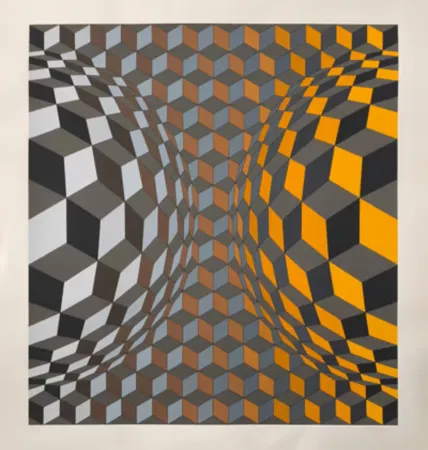
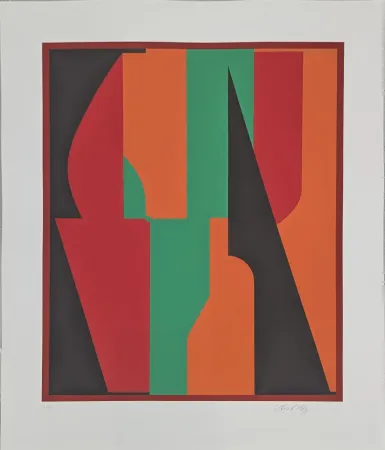
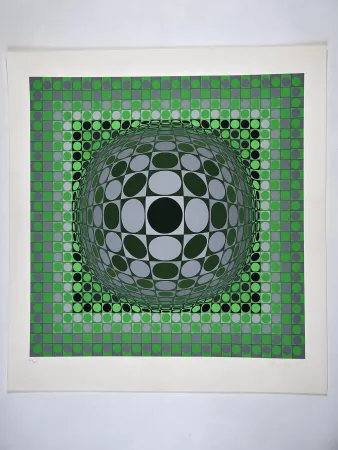
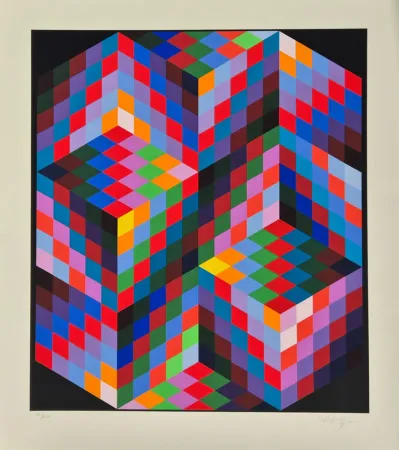
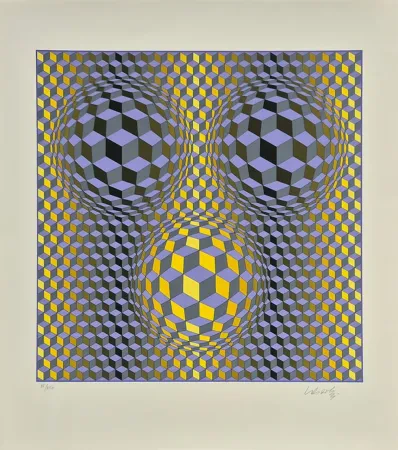
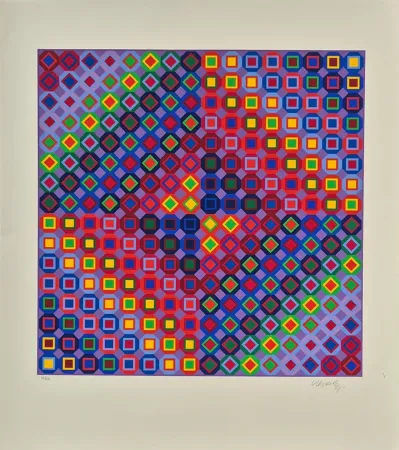
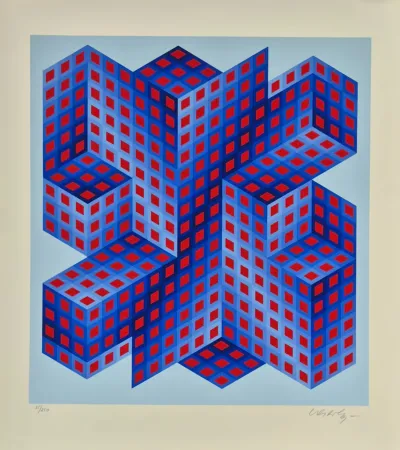
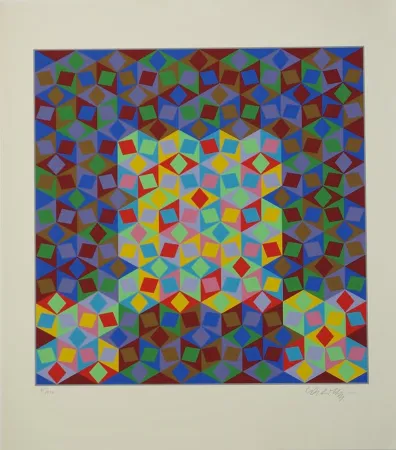
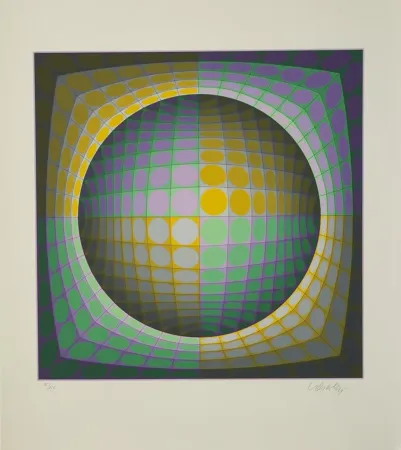
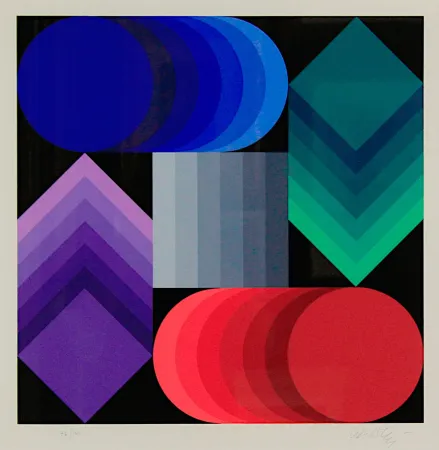
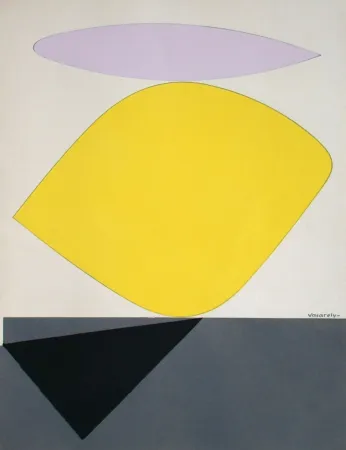
Lithographie, 1948
Signée à la main par l'artiste et numérotée 120/250
Éditeur : Fondation Vasarely, Château de Gordes
Imprimeur : Mourlot, Paris
Catalogue : Benavides 171
72.00 cm. x 62.00 cm. | 28.35 in. x 24.41 in. (papier)
54.00 cm. x 48.00 cm. | 21.26 in. x 18.9 in. (image)
Vélin d'Arches
Fait partie de l'album "Gordes" achevé en 1971
« Gordes signifie la fin de mes hésitations entre une figuration transposée et la non-figuration »
— Victor Vasarely (1969)
Ce petit village de Provence est le berceau de l’abstraction pour Vasarely. Il voit en ses pierres une perspective contradictoire : l’œil ne réussit pas à différencier l’ombre d’un pan de mur, les pleins et les vides se confondent, les formes et les fonds alternent. La réalité se détache peu à peu de l’art figuratif.
Le fond en bois crée un contraste avec la silhouette du château, suggérant une harmonie entre l'architecture et son environnement. Cette interaction met en lumière son évolution stylistique, la représentation figurative s'efface progressivement pour laisser place à une exploration des formes et des textures. Le bois devient ainsi un élément clé, symbolisant la transition vers des expressions artistiques plus dynamiques et évolutives.
Certificat d'authenticité
LCD6869
— English —
Lithograph, 1948
Hand-signed by the artist and numbered 120/250
Publisher: Fondation Vasarely, Château de Gordes
Printer: Mourlot, Paris
Catalogue: Benavides 171
Sheet: 72 x 62 cm (28.35 x 24.41 in.)
Image: 54 x 48 cm (21.26 x 18.9 in.)
Arches vellum
Part of the "Gordes" album completed in 1971
"Gordes marks the end of my hesitation between transposed figuration and non-figuration" — Victor Vasarely (1969)
This small Provençal village was the cradle of Vasarely's abstraction. In its stones he saw a contradictory perspective: the eye cannot tell a shadow from a section of wall, solids and voids merge, forms and grounds alternate, and reality gradually detaches itself from figurative art.
The wood-grain ground contrasts with the silhouette of the château, suggesting a harmony between architecture and its setting. This interplay highlights his stylistic evolution: figurative representation gradually fades to make way for an exploration of forms and textures.
Certificate of authenticity